

Peptide Therapy
Understanding Therapeutic Peptides
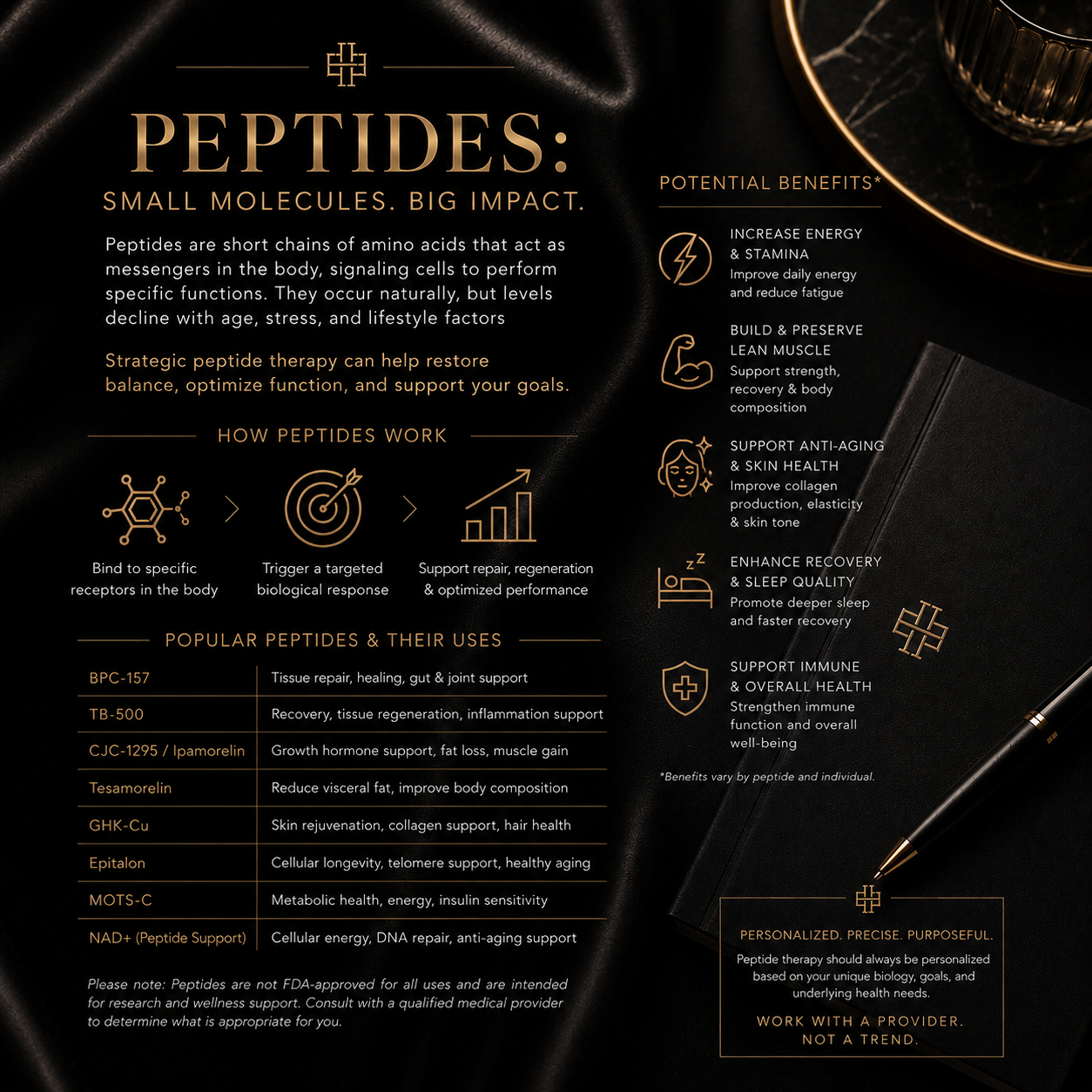
Peptides are short chains of amino acids that act as signaling molecules within the body, helping regulate a variety of biological processes including metabolism, tissue repair, hormone signaling, appetite regulation, recovery, and immune function.
In recent years, peptide-based therapies have gained attention in preventive and performance medicine, weight management, metabolic health, and recovery-focused care.
Some peptide therapies are FDA-approved for specific medical conditions, while others may be used off-label depending on clinical circumstances.
This page is intended for educational purposes only.
What Are Peptides Used For?
Depending on the specific compound and clinical indication, peptide therapies may be considered in areas such as:
metabolic support
body composition optimization
appetite regulation
recovery support
musculoskeletal healing support
hormone signaling pathways
sexual wellness
energy optimization
sleep support (select therapies)
Not every peptide is appropriate, evidence-supported, or medically indicated for every use.
Commonly Discussed Peptide Categories
Metabolic / Weight Management Peptides
Examples may include therapies that target appetite regulation and metabolic pathways.
Potential goals:
appetite reduction
weight management
improved metabolic control
improved insulin sensitivity in select patients
Examples:
semaglutide
tirzepatide
related incretin-based therapies
Recovery / Repair Focused Peptides
Some peptides are discussed in sports medicine and recovery settings for tissue support.
Examples commonly discussed:
BPC-157
TB-500 (thymosin beta derivatives)
Potential areas of interest:
soft tissue recovery
musculoskeletal support
injury recovery
Clinical evidence remains variable, and some compounds are not FDA approved.
Hormone / Signaling Support Peptides
Some peptides influence endocrine signaling pathways.
Examples:
ipamorelin
GLP-3 (Reta)
CJC-1295
sermorelin
hCG (though technically not a peptide therapy in the same consumer sense)
Potential goals:
growth hormone pathway stimulation
recovery
body composition support
endocrine optimization
These therapies require careful medical review and are not appropriate for all patients.
Sexual Wellness / Regenerative Interest
Some peptide-based therapies may be explored in sexual wellness settings depending on clinical goals.
Examples may include compounds discussed for:
libido support
vascular support
sexual function optimization
Use depends on individual clinical context.
What Evaluation Is Needed?
Peptide therapy should never begin without medical screening.
Evaluation may include:
full medical history
medication review
cardiovascular risk assessment
hormone evaluation (when relevant)
metabolic labs
kidney function
liver function
glucose / insulin markers
CBC
additional targeted labs depending on the peptide being considered
FDA Approval Status Matters
Some peptide-based medications are FDA approved for specific medical uses.
Others are experimental, investigational, compounded, or used off-label.
Before using any, make sure you understand the difference.
Medical decision-making should be based on safety, evidence quality, and individual risk—not marketing claims.